Marrakech Travel Guide: Medina, Riads, Gardens and How to Get Around
Plan a trip to Marrakech: where to stay in the medina, Jemaa el-Fna, Majorelle and the palaces, souk tips, day trips and what things really cost in 2026.

In this guide
Marrakech is loud, colourful, occasionally exhausting and completely unlike anywhere in Europe, yet it’s under four hours’ flight from most of it. The walled medina is a maze of souks, mosques and hidden courtyard houses, with the great square of Jemaa el-Fna at its heart. This guide covers where to stay, what to see, how to handle the souks and what things cost.
Marrakech at a glance
The city has two halves. The medina is the old walled city, a UNESCO World Heritage Site, where most of the sights, souks and riads are. Outside the walls, Gueliz and Hivernage form the French-era new town, with wide avenues, cafes, modern hotels and the train station.
Most visitors spend nearly all their time in the medina, walking. Cars can’t reach much of it, so your riad may be a few minutes’ walk from the nearest road.
When is the best time to visit Marrakech?
Spring (March to May) and autumn (October to November) are the best times: warm days, cool evenings and clear views of the snow-capped Atlas. Summer regularly passes 40°C, and the medina is at its hottest from midday to late afternoon. Winter days are sunny and mild, but nights are cold and riads can feel chilly.
During Ramadan (expected to begin around 8 February 2027, depending on the moon sighting), many cafes close by day and the city comes alive after sunset. Morocco also moves its clocks back an hour for the month, so double-check tour and train times.
Where should you stay in Marrakech?
Stay in a riad: a traditional house built around an internal courtyard, often with a plunge pool and roof terrace. From the outside you see only a plain wall and a door in an alley; inside, it’s quiet and cool.
| Area | Best for | Keep in mind |
|---|---|---|
| Medina, near Jemaa el-Fna | First-timers, walking to everything | Busy and noisy close to the square |
| Mouassine / north medina | Design riads, galleries, quieter alleys | Easy to get lost at first |
| Kasbah (south medina) | Palaces, calmer atmosphere | Further from the souks |
| Gueliz / Hivernage | Modern hotels, restaurants, bars | Taxi needed for the medina |
Ask your riad to send someone to meet you at the nearest car drop-off on your first arrival. Finding a riad in the dark with luggage is a classic Marrakech ordeal.
Things to do in Marrakech
Jemaa el-Fna
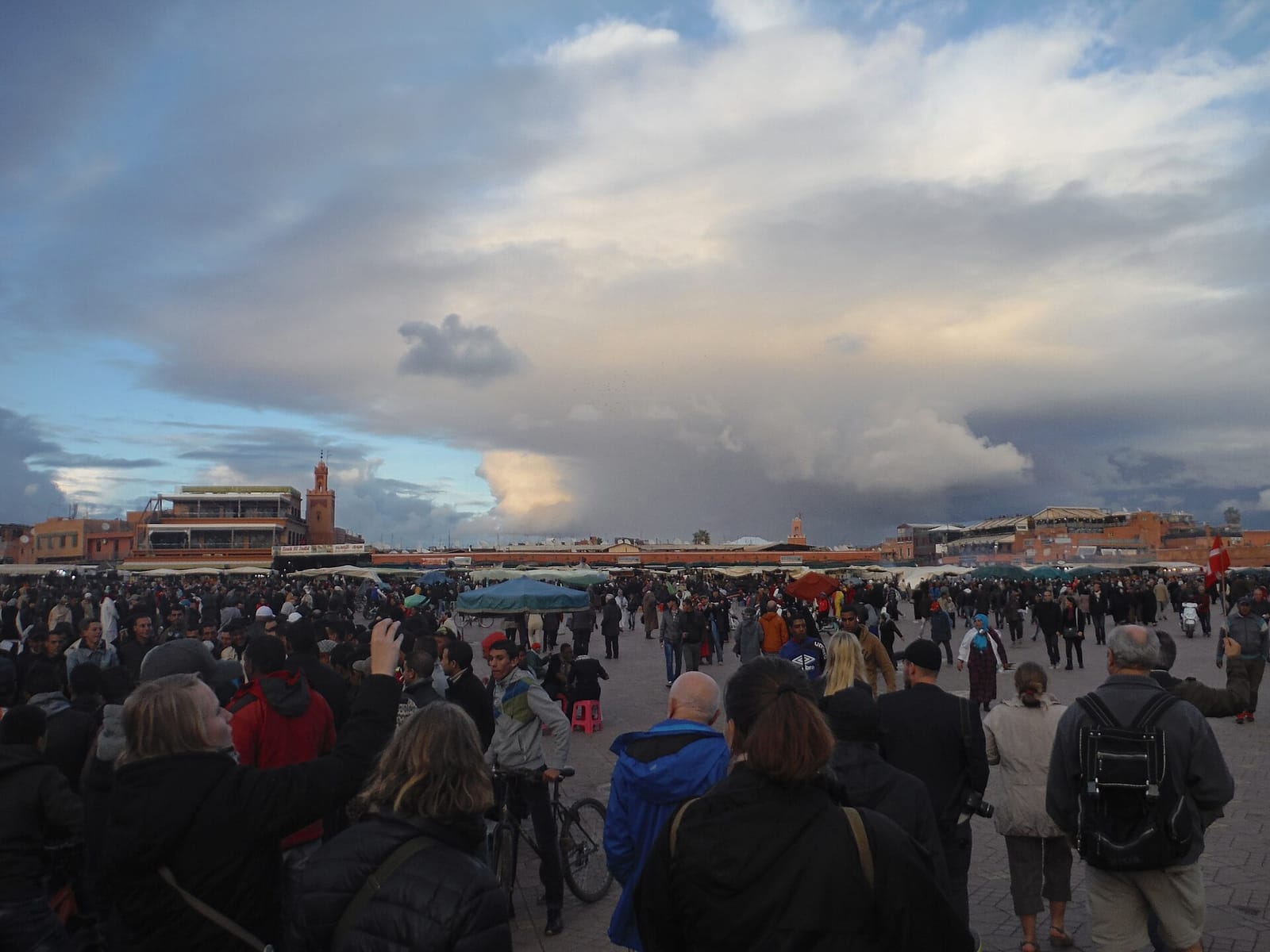
Jemaa el-Fna in the late afternoon. Photo: Elgaard, CC BY-SA 4.0
The square changes through the day: juice stalls and henna artists in the morning, snake charmers and musicians in the afternoon, and dozens of smoking food stalls after dark. UNESCO recognised it as a masterpiece of intangible cultural heritage for its storytellers and performers.
Watch from a rooftop cafe at sunset, then eat at the numbered food stalls. If you take a photo of a performer, expect to pay a few dirhams, and agree the amount first.
Jardin Majorelle
The cobalt-blue villa and cactus gardens created by painter Jacques Majorelle and later restored by Yves Saint Laurent and Pierre Bergé. It’s small and very popular, so go at 8:00 when it opens or late afternoon. Tickets are sold online only through the official site (around 170 dirhams for the garden), with separate or combined tickets for the Berber Museum inside and the Musée Yves Saint Laurent next door.
Bahia Palace
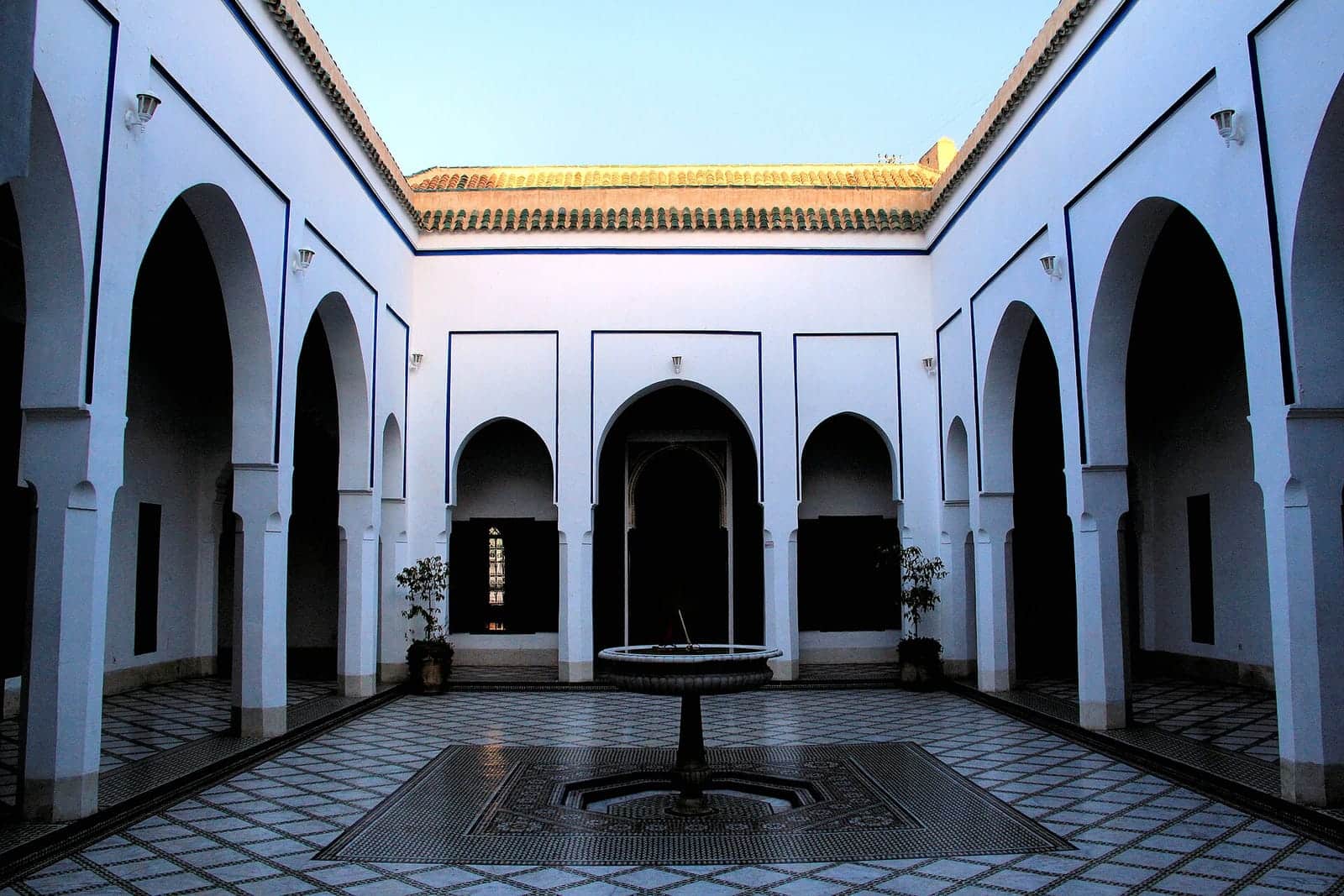
Bahia Palace. Photo: Lionel Leo, CC BY-SA 3.0
A 19th-century palace of painted cedar ceilings, zellige tilework and garden courtyards. Foreign adults pay 100 dirhams at the gate; it’s open daily from 9:00 to 17:00.
Ben Youssef Madrasa
A 16th-century Quranic school with one of the most beautiful courtyards in Morocco: carved stucco, cedar and tile around a reflecting pool. Tickets cost 50 dirhams for foreign visitors.
The souks
The souks start just north of Jemaa el-Fna and sprawl for kilometres. Different lanes specialise in leather, metalwork, lamps, spices, carpets and textiles. Our Morocco travel tips cover haggling in detail, but the short version: don’t start negotiating unless you want the item, offer well under the first price, and walk away politely if it’s too much.
A hammam
A traditional steam bath with a black-soap scrub is the best way to recover from a day in the souks. Local public hammams cost very little but are basic; spa hammams in riads and hotels are more comfortable and cost far more.
What to eat
At the Jemaa el-Fna stalls, look for grilled meats, harira soup, snail broth and tanjia, the Marrakech speciality of beef or lamb slow-cooked in a clay urn in the ashes of a hammam fire. Our Moroccan food guide covers what to order across the country.
Getting there and around
- From the airport: Marrakech Menara (RAK) is about 6 km from the medina. Bus 19 runs to Jemaa el-Fna and Gueliz for about 30 dirhams one way. A petit taxi costs roughly 50 to 100 dirhams by day, with a surcharge at night; agree the price first, or insist on the meter.
- By train: ONCF trains from Casablanca take about 2 hours 40 minutes. The station is in Gueliz.
- In the medina: walk. Map apps work but alleys confuse GPS. Ignore people offering directions unless you’re happy to pay them.
- Petit taxis (beige in Marrakech) are cheap for trips to Gueliz and Majorelle. Carry small notes.
Day trips from Marrakech
- Ourika Valley and the Atlas Mountains: Berber villages, waterfalls and cooler air, about an hour away.
- Imlil and Toubkal National Park: the base for hikes toward Toubkal, North Africa’s highest peak.
- Agafay Desert: a stony desert about 40 minutes away, with camps for sunset dinners. For real sand dunes you need to go much further: see our 7-day Morocco itinerary.
- Essaouira: a whitewashed, windswept port on the Atlantic, about 2.5 to 3 hours by bus.
How much does Marrakech cost?
| Item | Typical price (dirhams) |
|---|---|
| Riad double room | 400 to 900 (budget), 1,000 to 2,500 (mid-range) |
| Meal at a food stall | 40 to 80 |
| Tagine at a local restaurant | 60 to 120 |
| Mint tea in a cafe | 10 to 25 |
| Bus 19 from the airport | 30 |
| Bahia Palace | 100 |
| Ben Youssef Madrasa | 50 |
| Jardin Majorelle (garden) | around 170, online only |
See our Morocco trip cost breakdown for a full daily budget.
At a glance
Jemaa el-Fna
The main square of Marrakech's medina, a UNESCO-listed Masterpiece of the Oral and Intangible Heritage of Humanity.
- Address
- Marrakech, MA
Jemaa el-Fna
Open in Google Maps ↗Know before you go
Morocco at a glance
Best time to visit
March to May, September to November
- Capital
- Rabat
- Currency
- Moroccan dirham (MAD)
- Language
- Arabic, Tamazight (French widely used)
- Time zone
- UTC+1 (UTC+0 during Ramadan)
- Plugs
- Type C / E, 220 V
- Driving
- On the right
Emergency19 police, 15 ambulance
Frequently asked questions
How many days do you need in Marrakech?
Three days covers the medina, Jardin Majorelle, the palaces and a hammam at a relaxed pace. Add a day or two for the Atlas Mountains or the Agafay desert.
Is Marrakech safe for tourists?
Marrakech is generally safe, but pickpocketing and persistent touts are common in the medina. The main risks are scams: fake 'the square is closed' guides, unrequested directions followed by a demand for money, and henna artists who start before you agree a price.
What should I wear in Marrakech?
Loose clothing that covers shoulders and knees is comfortable and respectful, for men and women. It helps in the heat and reduces unwanted attention in the medina.
How do I get from Marrakech airport to the medina?
Bus 19 runs between the airport and Jemaa el-Fna for about 30 dirhams. Petit taxis cost roughly 50 to 100 dirhams by day, with a surcharge at night; agree the fare before you leave. Many riads arrange a pickup, which is the easiest option at night.
Useful links (4)
- Jardin Majorelle (official site)— jardinmajorelle.com
- Medersa Ben Youssef: opening hours and ticket prices (official)— medersabenyoussef.ma
- Jemaa el-Fna Square, UNESCO Intangible Cultural Heritage— ich.unesco.org
- Morocco travel advice, US State Department— travel.state.gov


